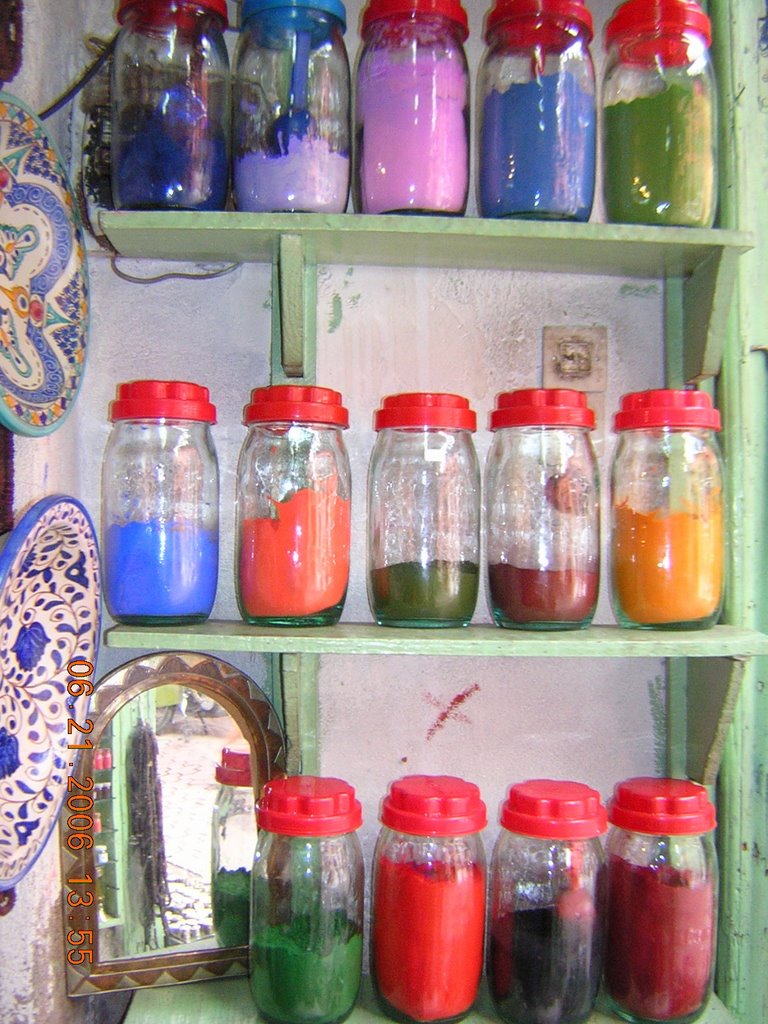
Dyed yarn
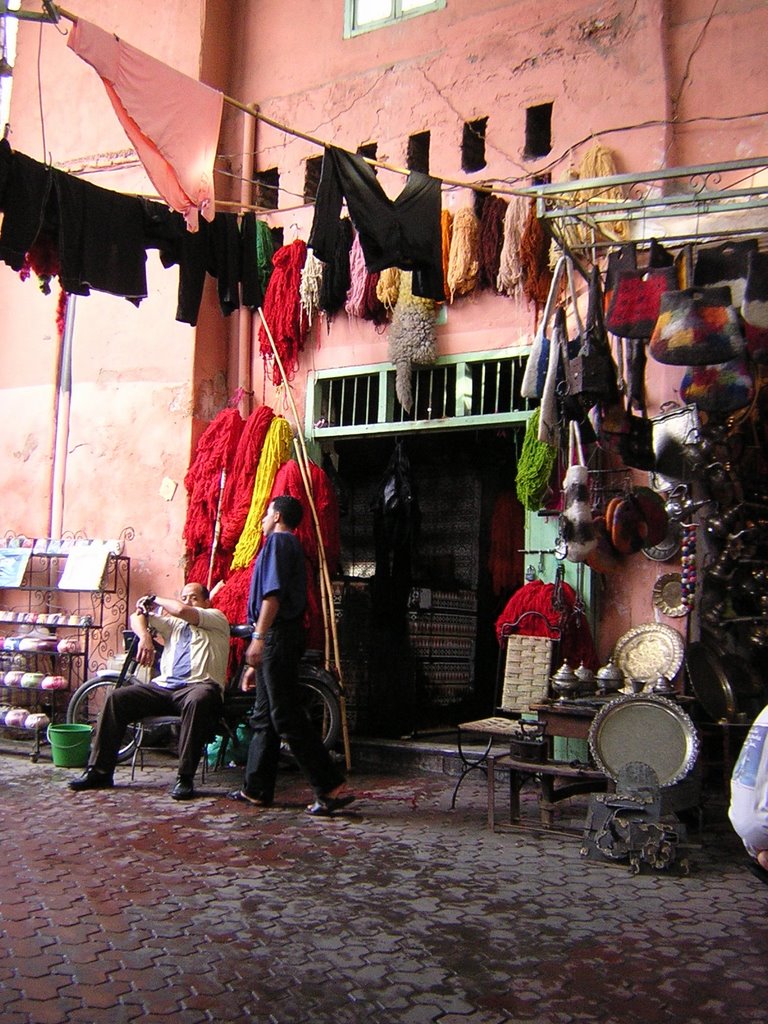
Felted bags
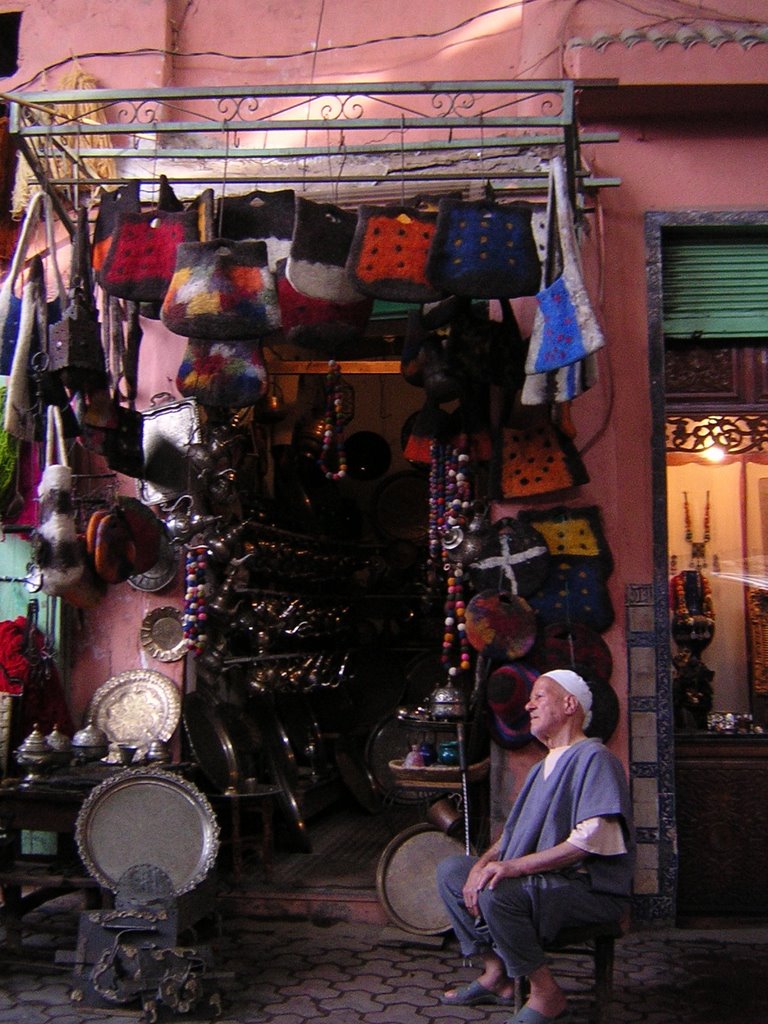
Dyers' market
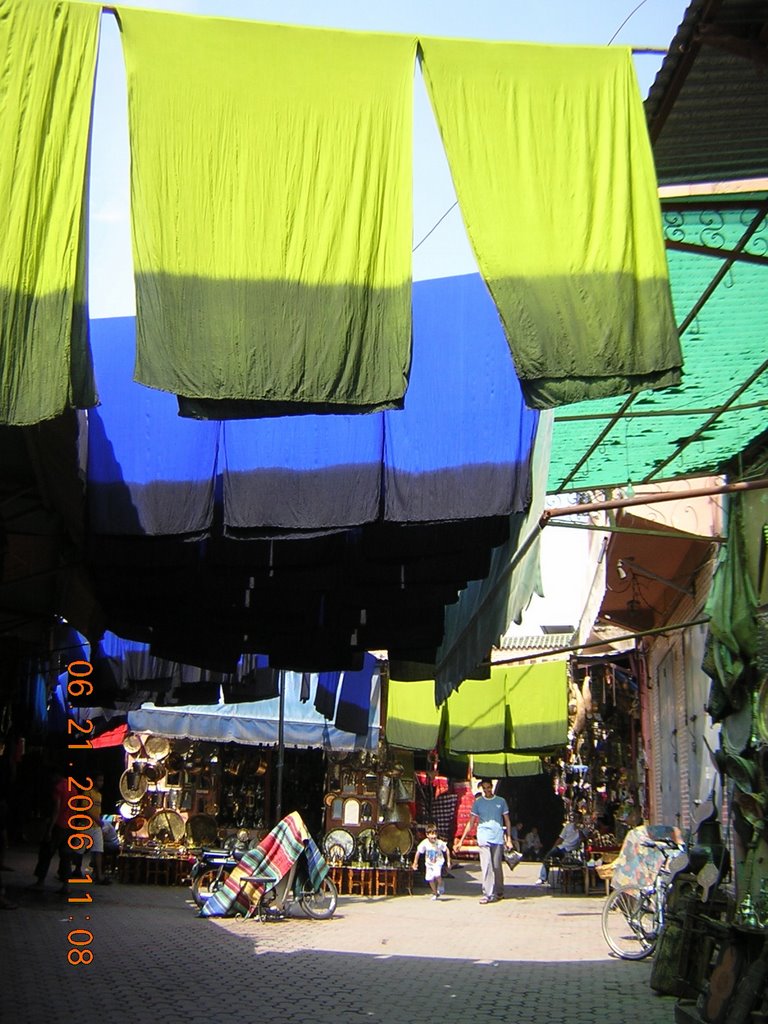
Dyed fleece
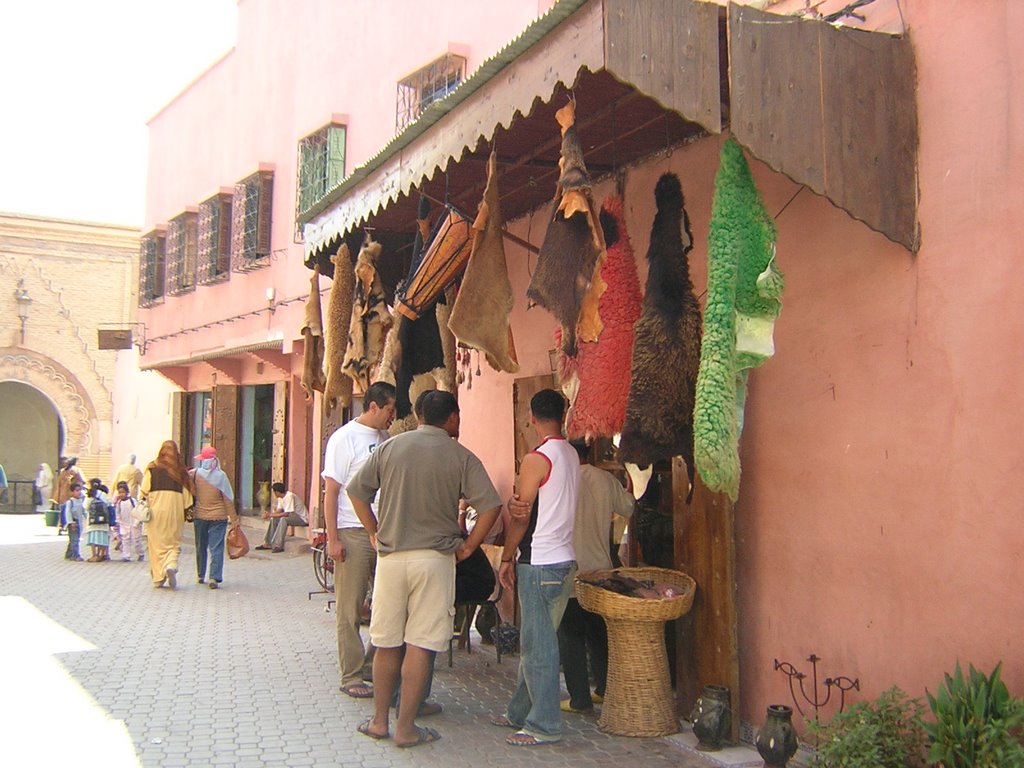
Tannery
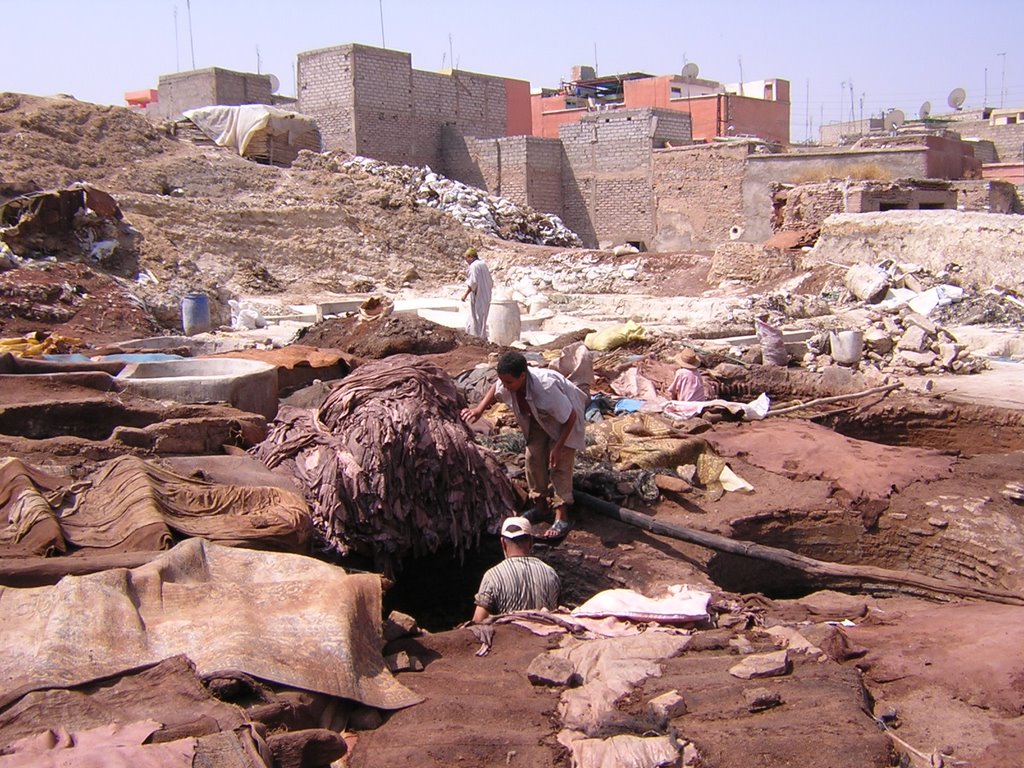
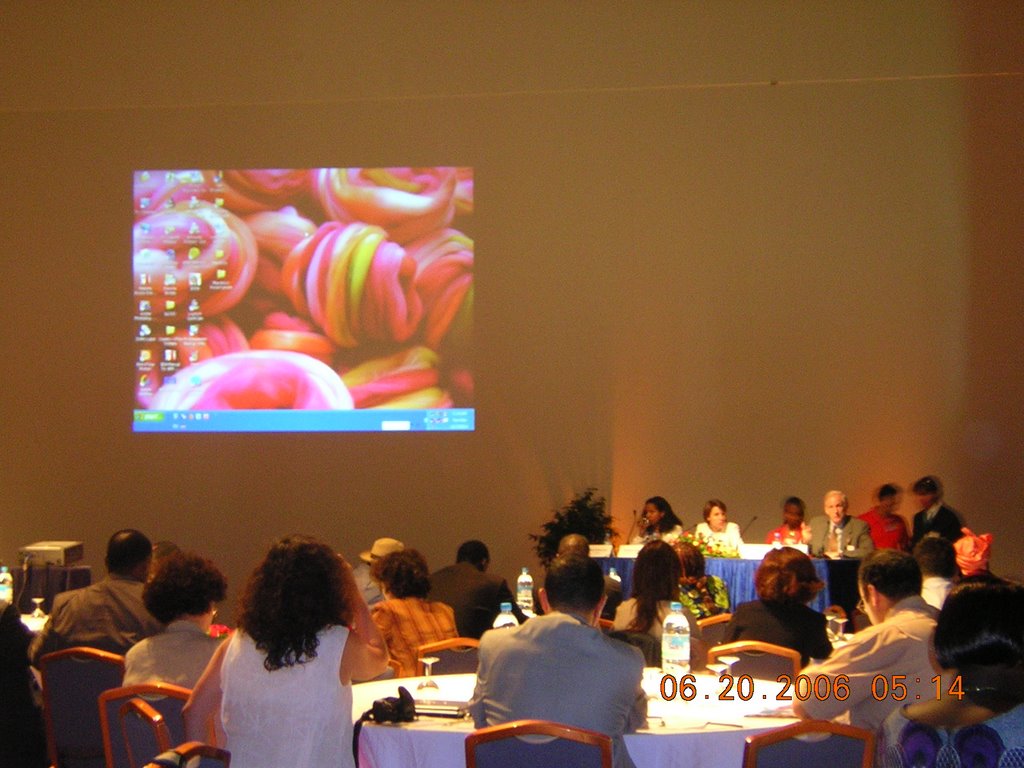
Hello Yarn's woolly wallpaper at the AIDS conference in Marrakesh.


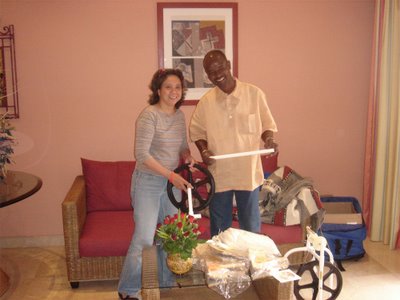 A Babe charkha and a Pinkie spinning wheel came with me on a business trip to Marrakesh this month, along with four sets of carders (two for wool and two for cotton) made by Otto Strauch. The tools and equipment were handed over to Youssouf Diallo, a physician from the Mali National AIDS Council, who suggested during our first meeting last month in Nairobi that the women of Segou would be the ideal beneficiaries of my project, "Charkhas for Africa". The city of Segou is known for spinning (with a spindle), dyeing and weaving.
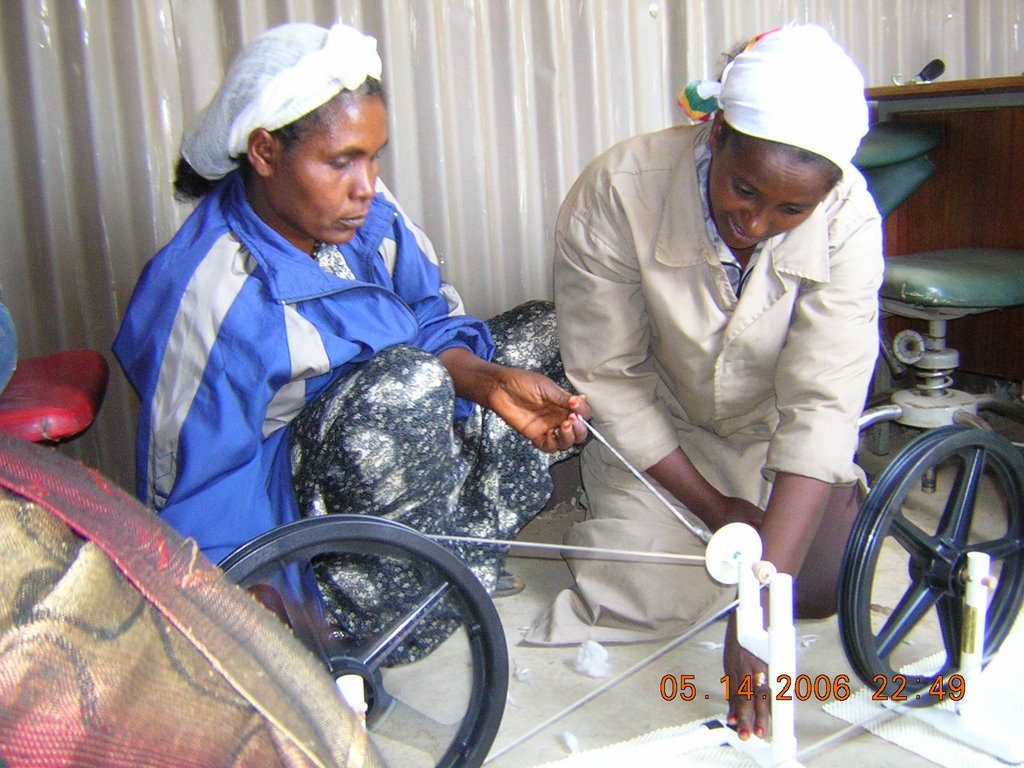
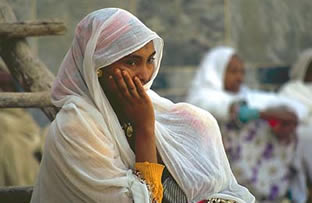 This is the traditional Ethiopian garb. It is made of cheesecloth woven by hand with cotton thread spun on a spindle.

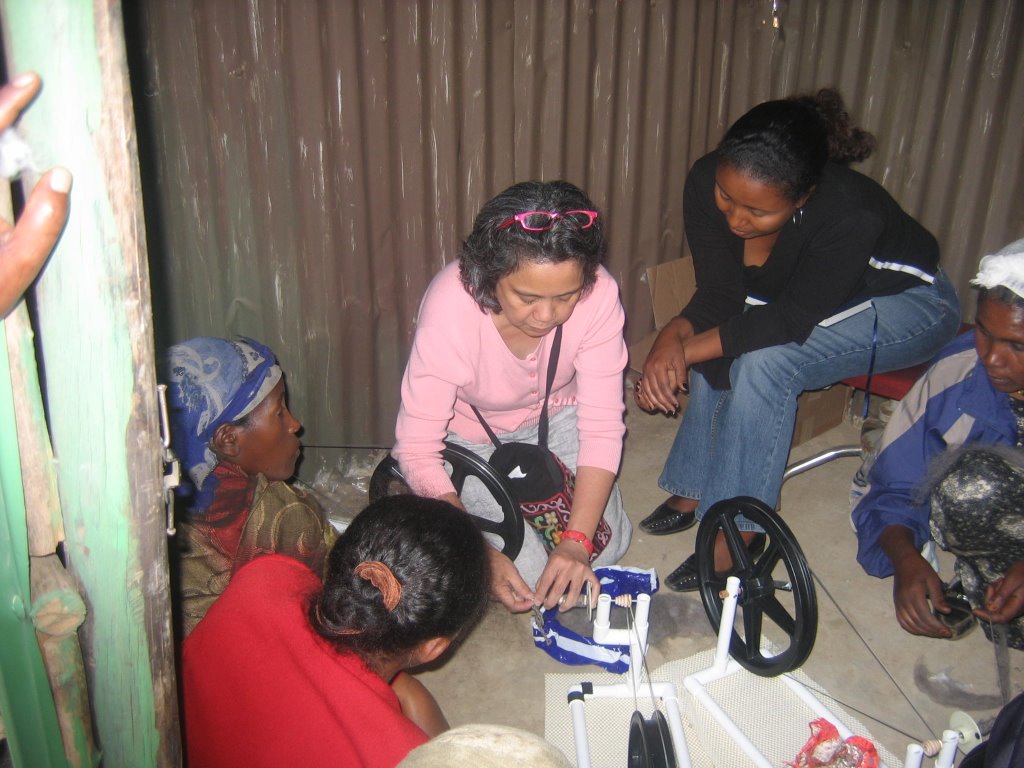 Here I am assembling a charkha with a Mary Joy staffer who acted as interpreter.
 As anybody anywhere in the world with a new "toy", the Ethiopian women were enthralled.
 In the meantime, I have met other Africans who would like to see the same equipment introduced to other countries in the continent. Togo, for instance. And Mali, where they are, I was told, also badly in need of handcarders.
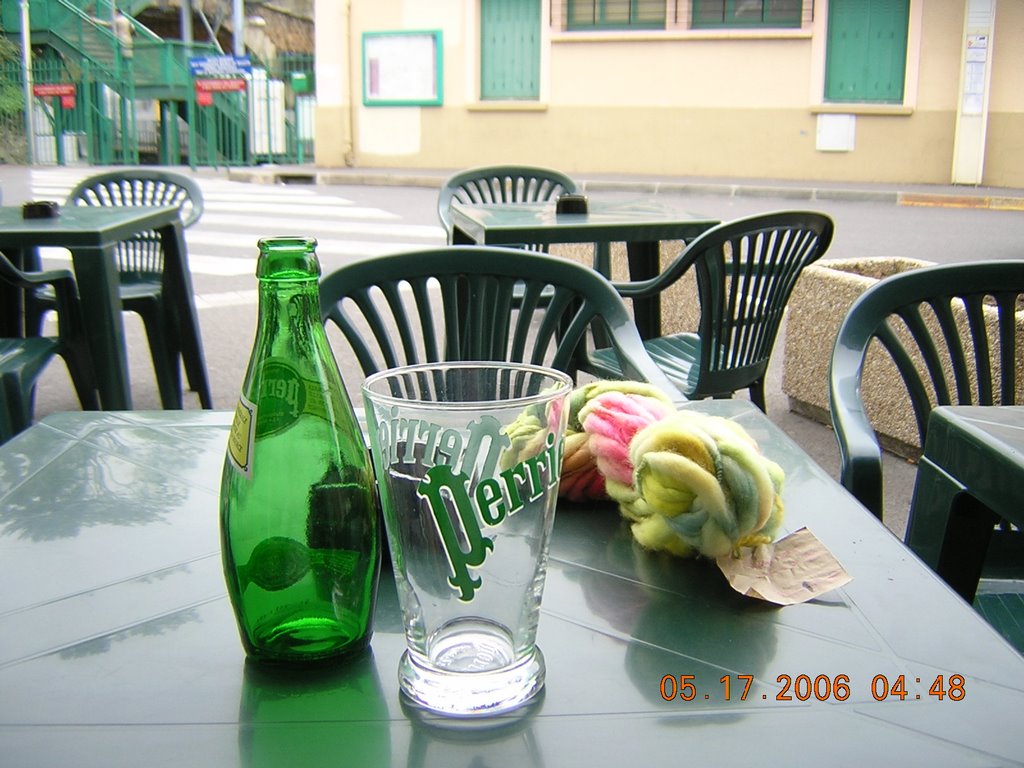 Here I am outdoors of the tabac in front of the Palaiseau RER station. This is Laurence Pocztar's train stop. Palaiseau is just outside Paris, about 20 short stops from the Etoile. I'm bringing a bag of fiber-related goodies and I put a skein of handspun on the table so she doesn't miss me.
 In front of me are some of the people in the neighborhood, having beer and saying "hello" to each other.
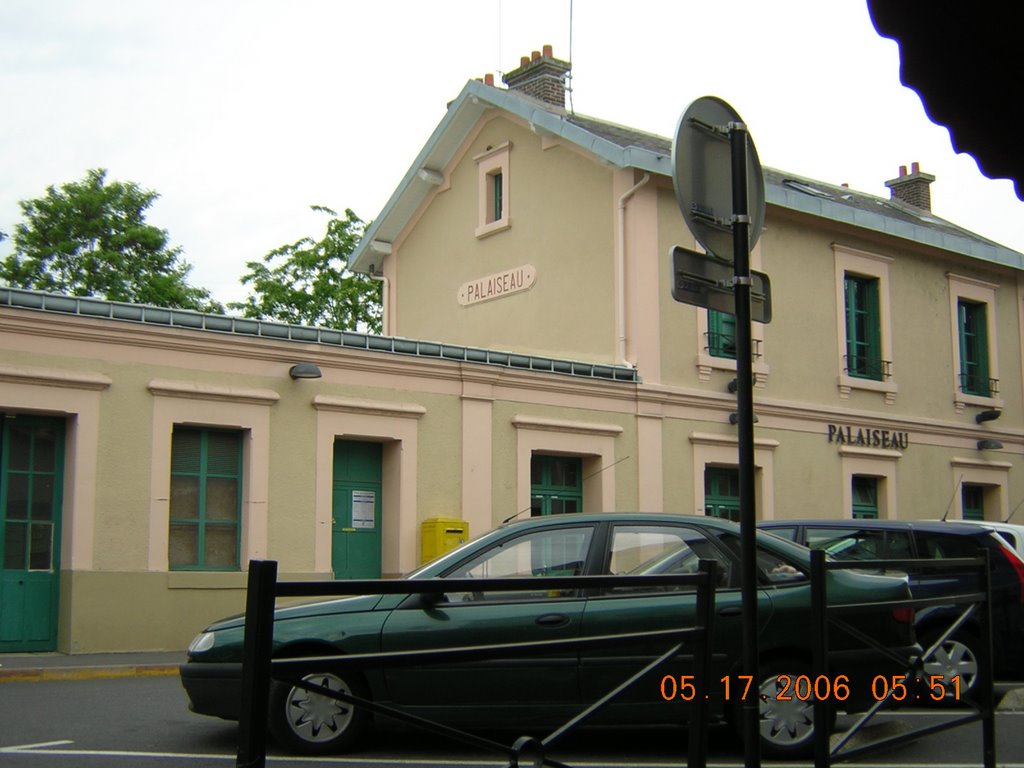 From the tabac, you look up and see the train station building.
 Finally, Laurence picks me up in her little yellow SUV and, at home, I meet her 18-year-old son, Adrien, and her 12-year-old daughter, Garance (seen here taking our photo). She is unpretentious and unaffected. Genuinely warm at first meeting, although we had hardly said much in emails, other than to agree on the time and the date.


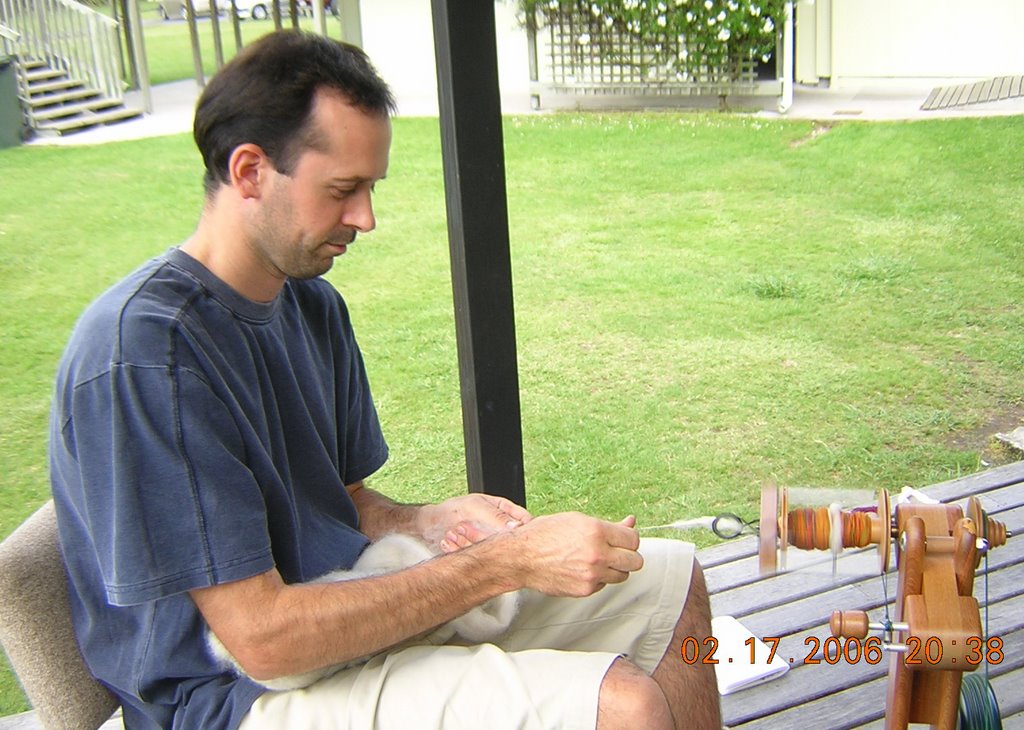
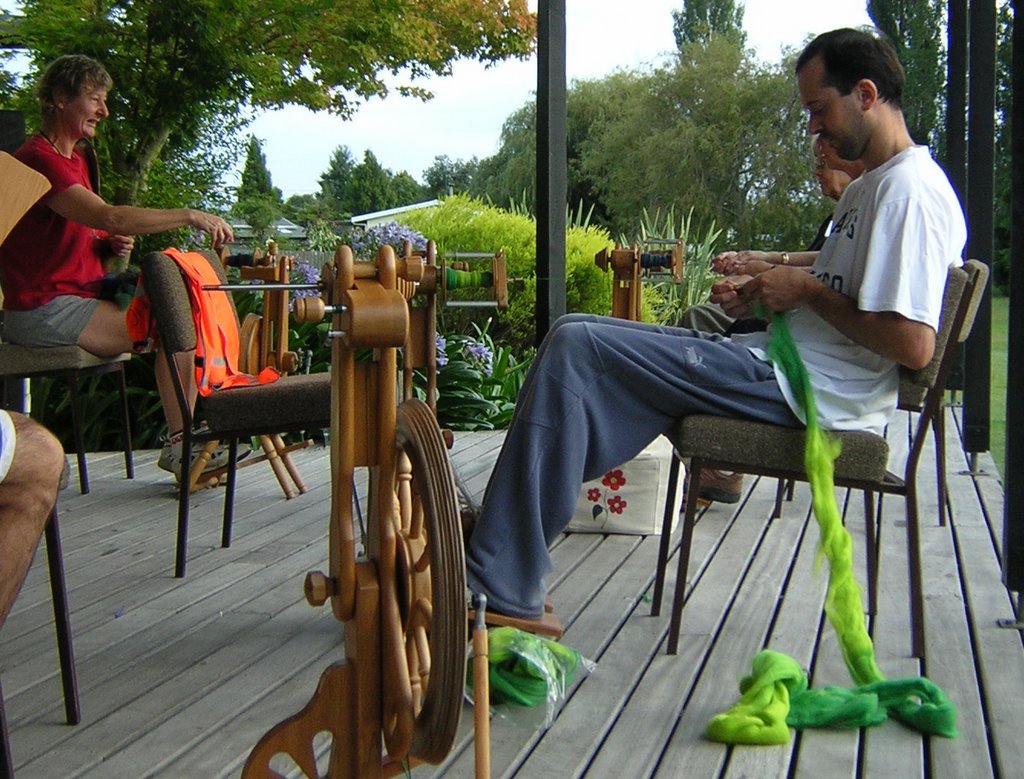

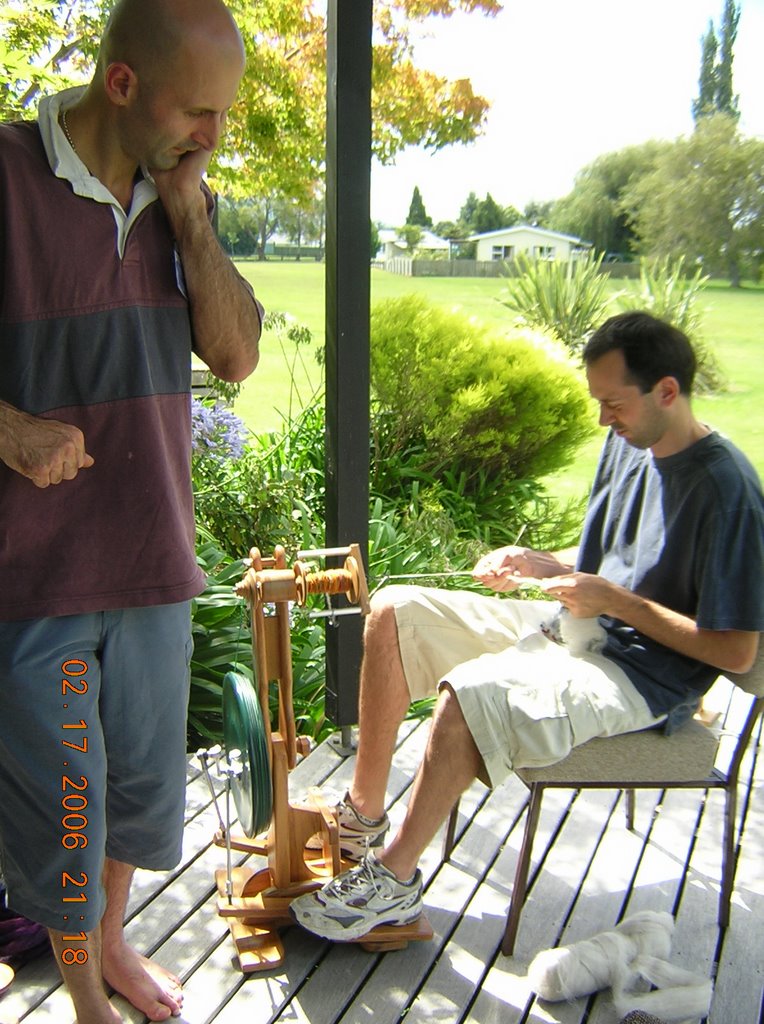 Andrew curiously studying the cocoon his brother is spinning, and...
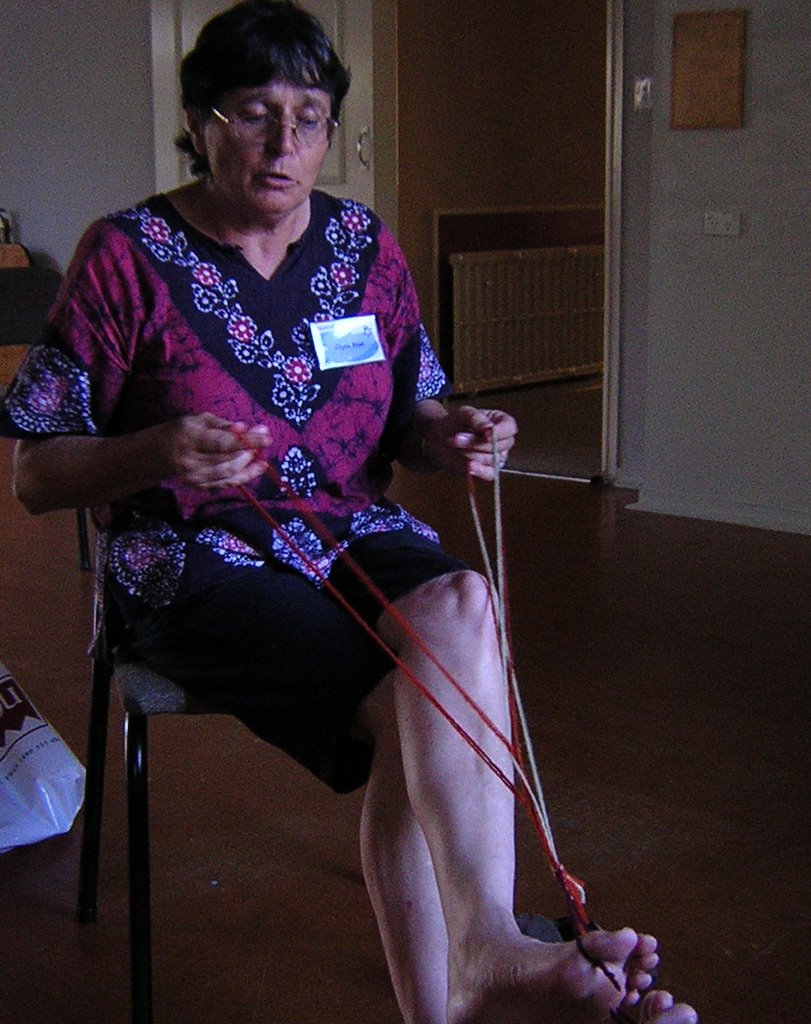 Glynis taught us how to do traditional braiding with no gadgets; just the toe. She's the one who answers emails to Majacraft and appears in all the ads.
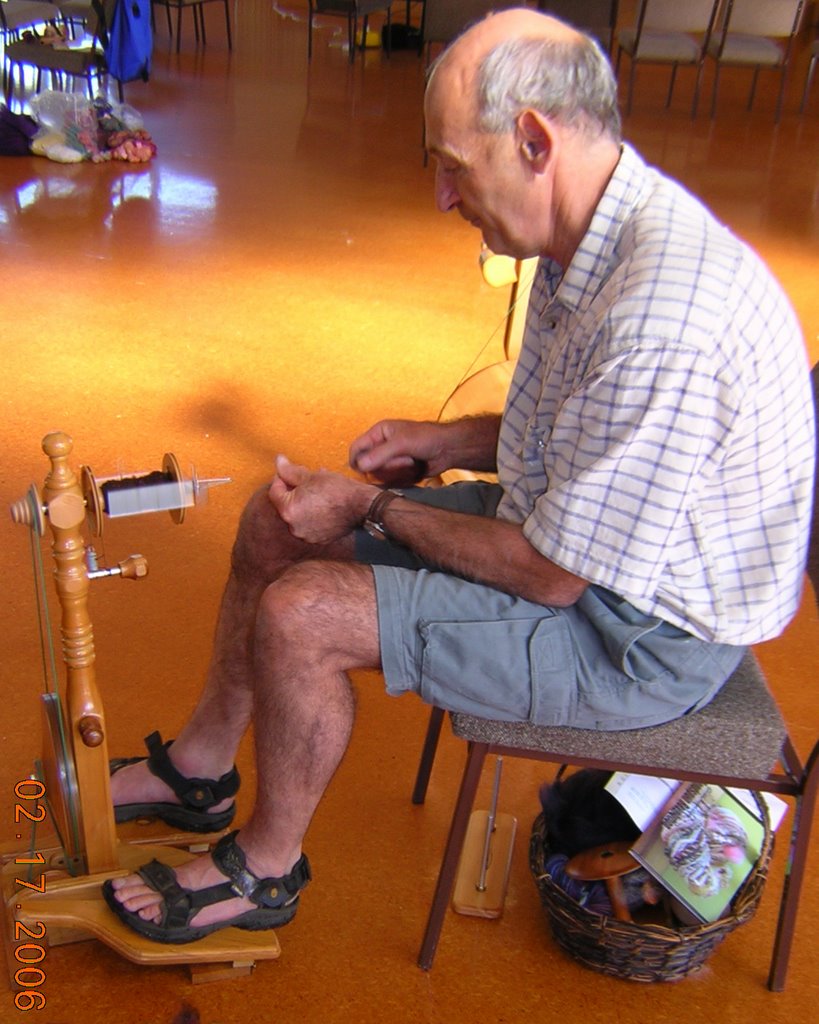 Owen created the Little Gem, modifying it over a period of three years. Now it's perfect! Here he is spinning on my own Little Gem (how cool is that?!). Notice under the chair Glynis' copy of Lexi Boeger's Handspun Revolution. The Poads rock!
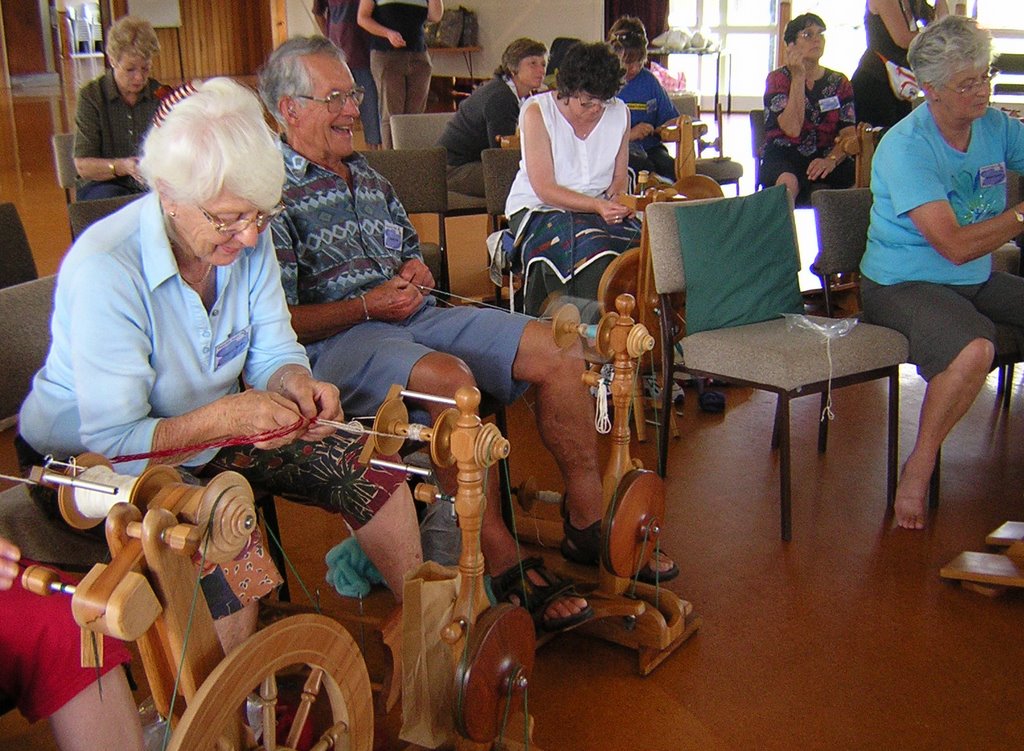

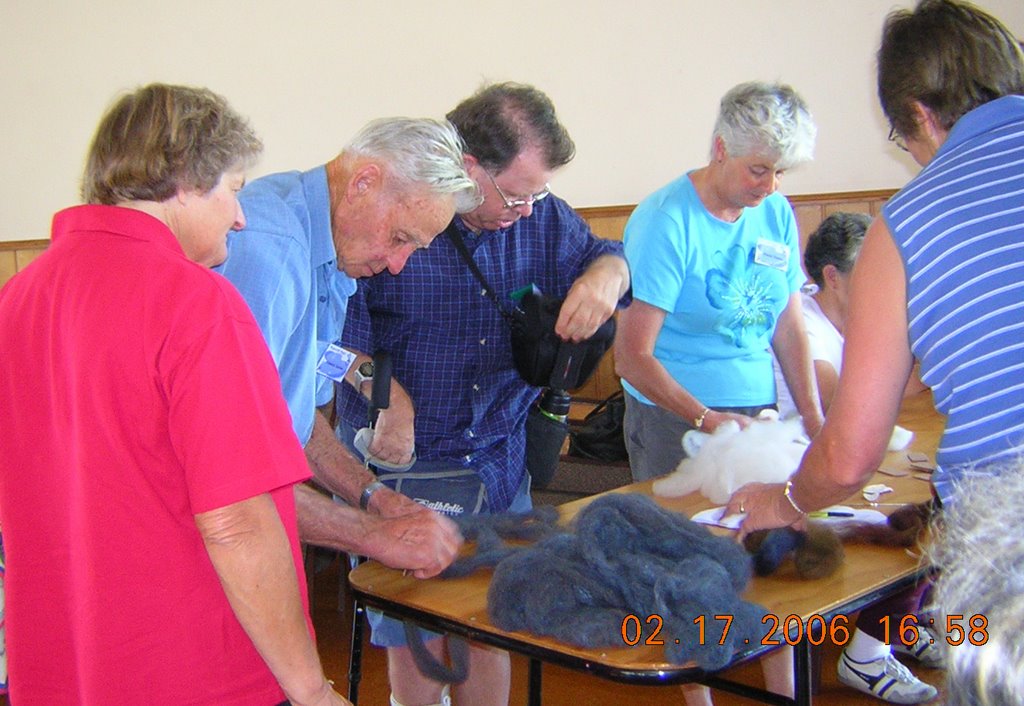


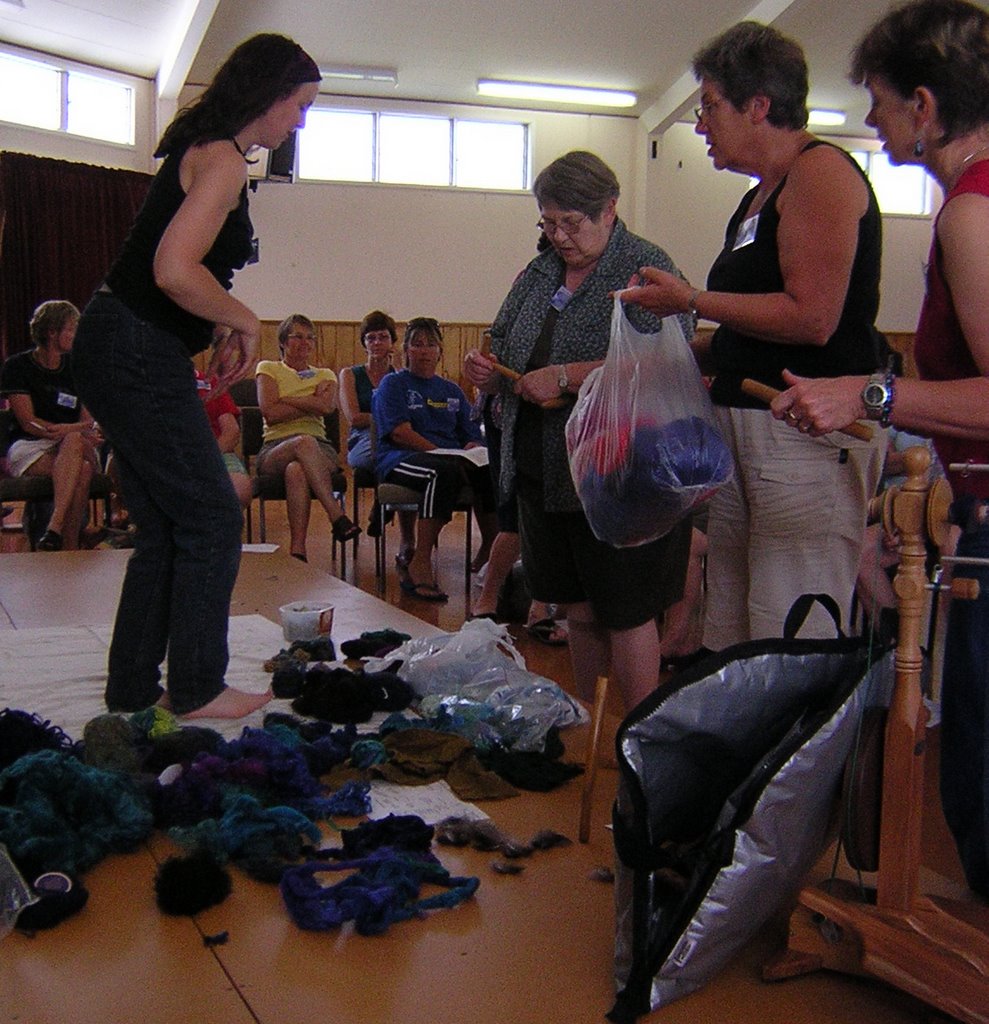

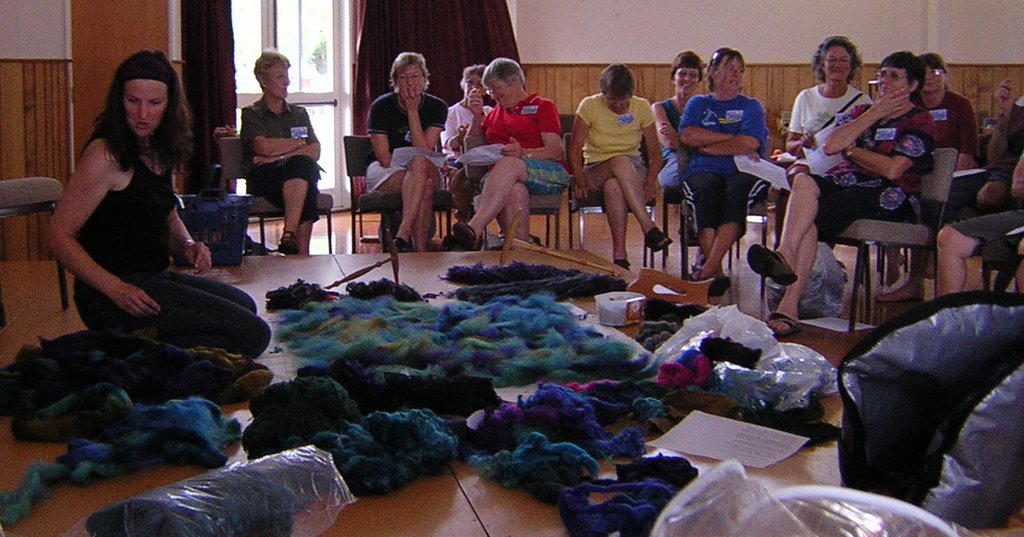
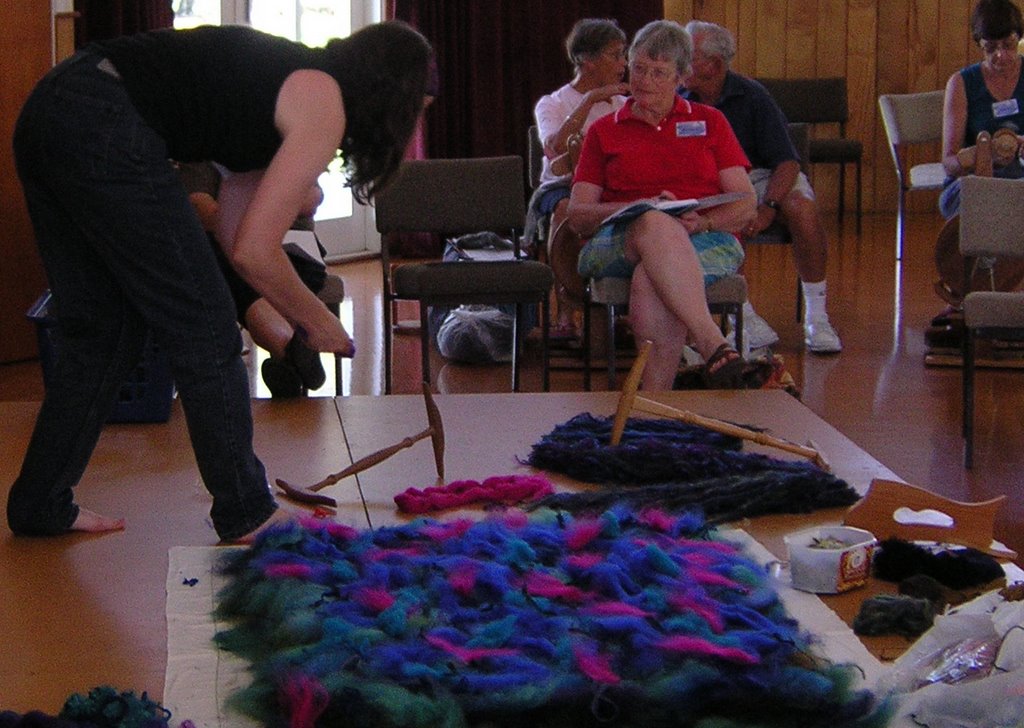
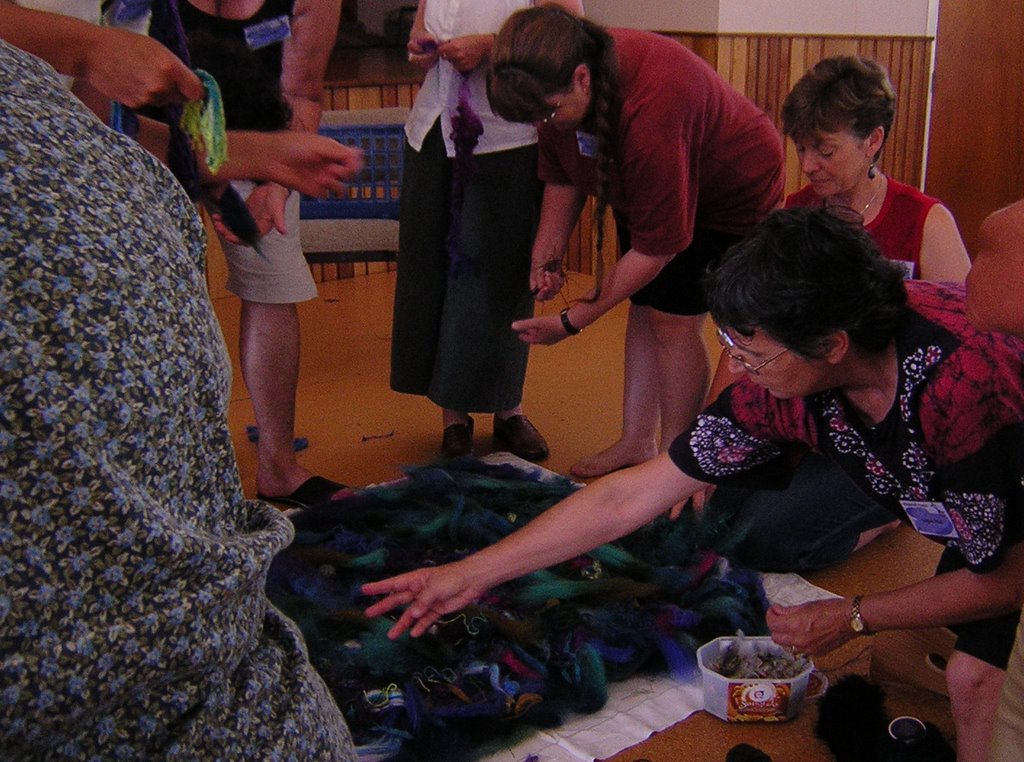

 Tracy shows how to spin and connect fiber, commercial yarn, and strips of fabric.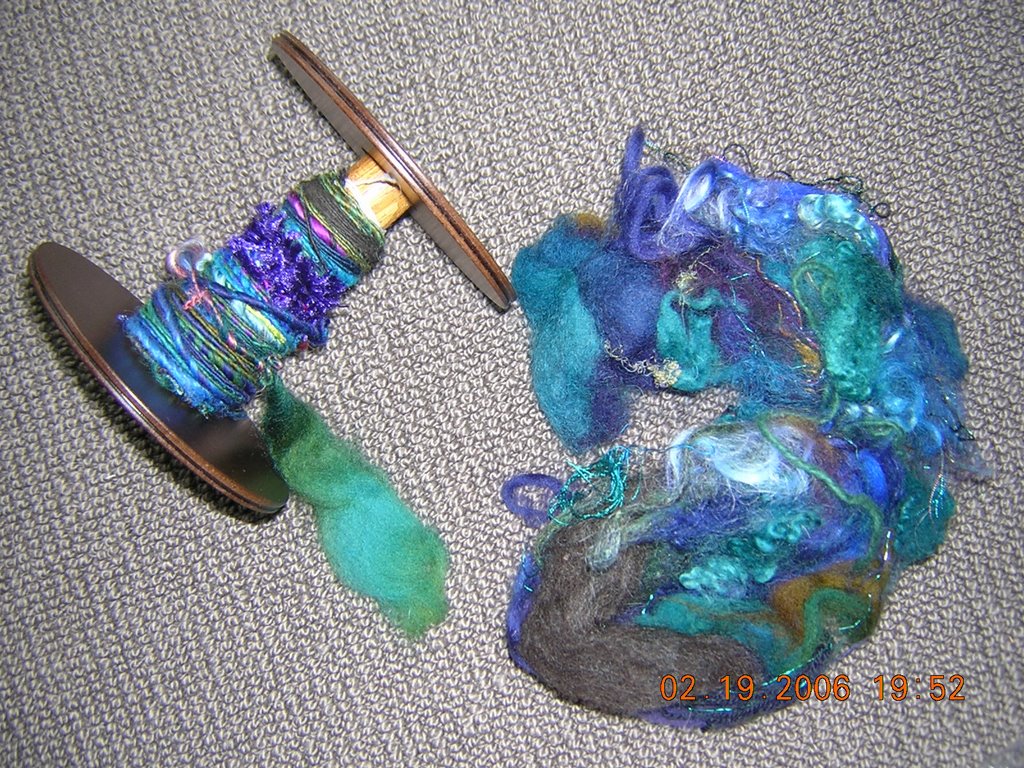
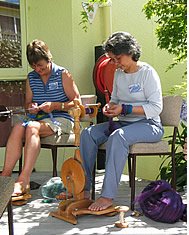 Pat Old (left), well-known Kiwi fiber artist, and me spinning away on Little Gems. Read about it here.
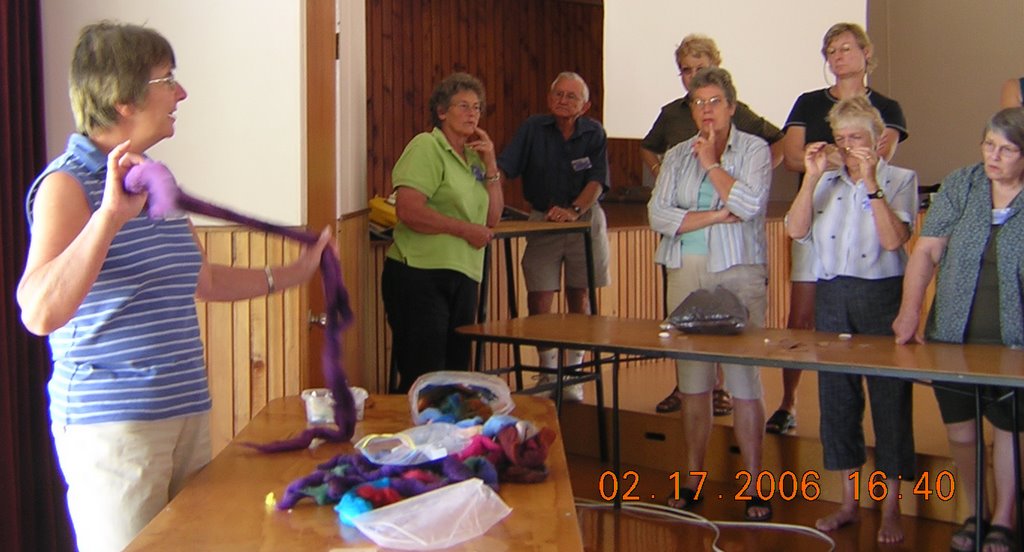 Pat, teaching spinners how to use the diz. She also taught us a trick on how to make instant bouclé: spin a single from regular wool and another from superwash, then ply them together and felt. Voîlà, instant bouclé.
 I tried to passed on to Pat what I learned from Lexi Boeger at Camp Pluckyfluff East, like the cocoon and the nubbs. In the photo is her first attempt at the cocoons, following my miserable instructions. Of course, Pat made better cocoons on her own! By the way, Pat has the Certificate of Excellence in Handspinning.
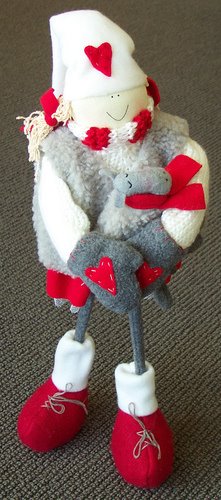
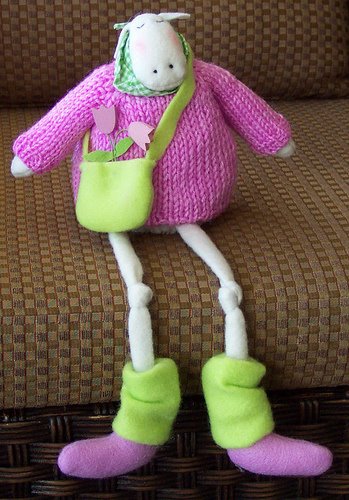 Here's a cool sheep all decked in pink and green. She's from a Kiwi shop called In the Pink and I was told she comes from France.
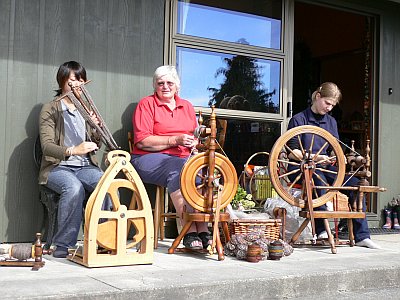 Biddy at home.
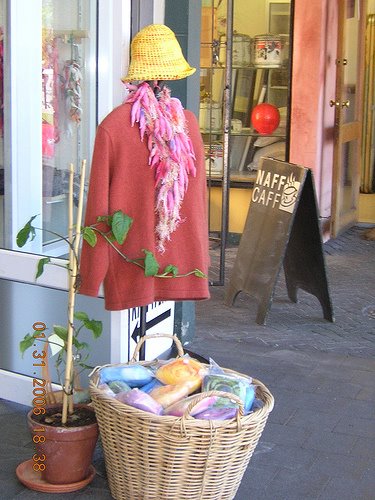 Veronica used to have another place, a little display shop called Little Wool Shed. The place is now owned by two young Japanese women, Toyoko and Chiyo. Chiyo, under the name "Sheep Mate" spins fabulous yarn on a Kiwi (Toyoko spins on an Ashford Joy). Her specialty is thick and thin yarn which, when made into a scarf and worn around the neck, looks like a yarn choker (see photo).
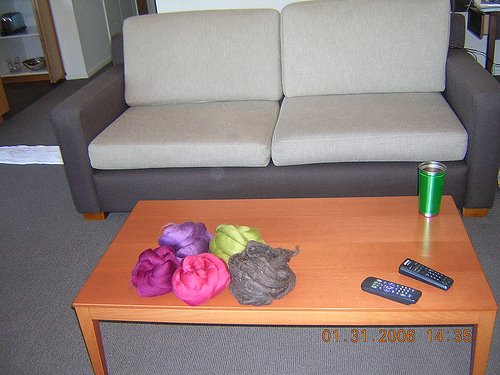 I went to see Veronica of Kiwi Gifts, the local yarn shop in Queens- town. It was from Veronica that I bought my first spinning wheel, an Ashford Kiwi, in March 2005. She sells mostly yarns and knits and no spinning wheels, but will order from the manufacturer on request. Last year she carried Corriedale fiber, but this year, her fibers are mostly merino, dyed and natural. On the coffee table are a sampling of the merino fiber, my first purchase in NZ this year.
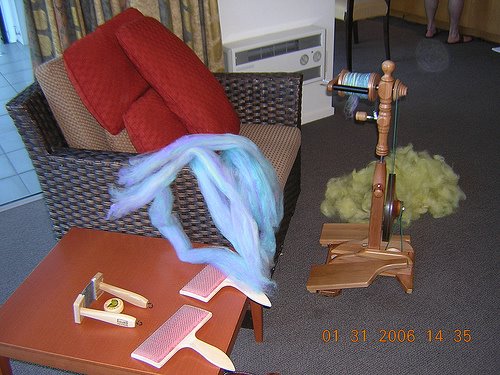 Thirty-six hours since leaving Cabin John, we are finally in Blue Peaks Apts. First things first: set up that Little Gem.